Spanish Virgin Islands 101: Why Vieques and Culebra Belong on Your Charter Itinerary
Ask most first-time charter guests where they're sailing, and they'll probably say the British Virgin Islands or the U.S. Virgin Islands.
Almost nobody says Puerto Rico. That's a little surprising once you've spent time on the water here because, tucked between St. Thomas and the Puerto Rican mainland, sits a pair of islands that many charter itineraries sail past.
The Spanish Virgin Islands, made up primarily of Culebra and Vieques, are close enough to reach comfortably from St. Thomas, yet far enough off the usual routes to feel noticeably different.
For guests looking to experience a different side of the Virgin Islands, these islands offer a rewarding addition to a traditional charter itinerary. Here's what makes them worth the crossing.
What Makes Them "Spanish"
Despite the name, the Spanish Virgin Islands aren't a separate territory. Culebra and Vieques belong to Puerto Rico, but geographically they're part of the same island chain that includes the U.S. and British Virgin Islands.
That distinction matters less on a map than it does on the water. While St. Thomas and St. John welcome a steady flow of charter traffic throughout the season, Culebra and Vieques remain comparatively quiet.
From Red Hook, the crossing to Culebra is roughly 20 to 25 nautical miles, making it an easy first stop for many week-long itineraries.
Culebra: White Sand Beaches and Quiet Anchorages
Culebra may be the smaller of the two islands, but it's home to one of the Caribbean's most recognizable beaches.
Playa Flamenco
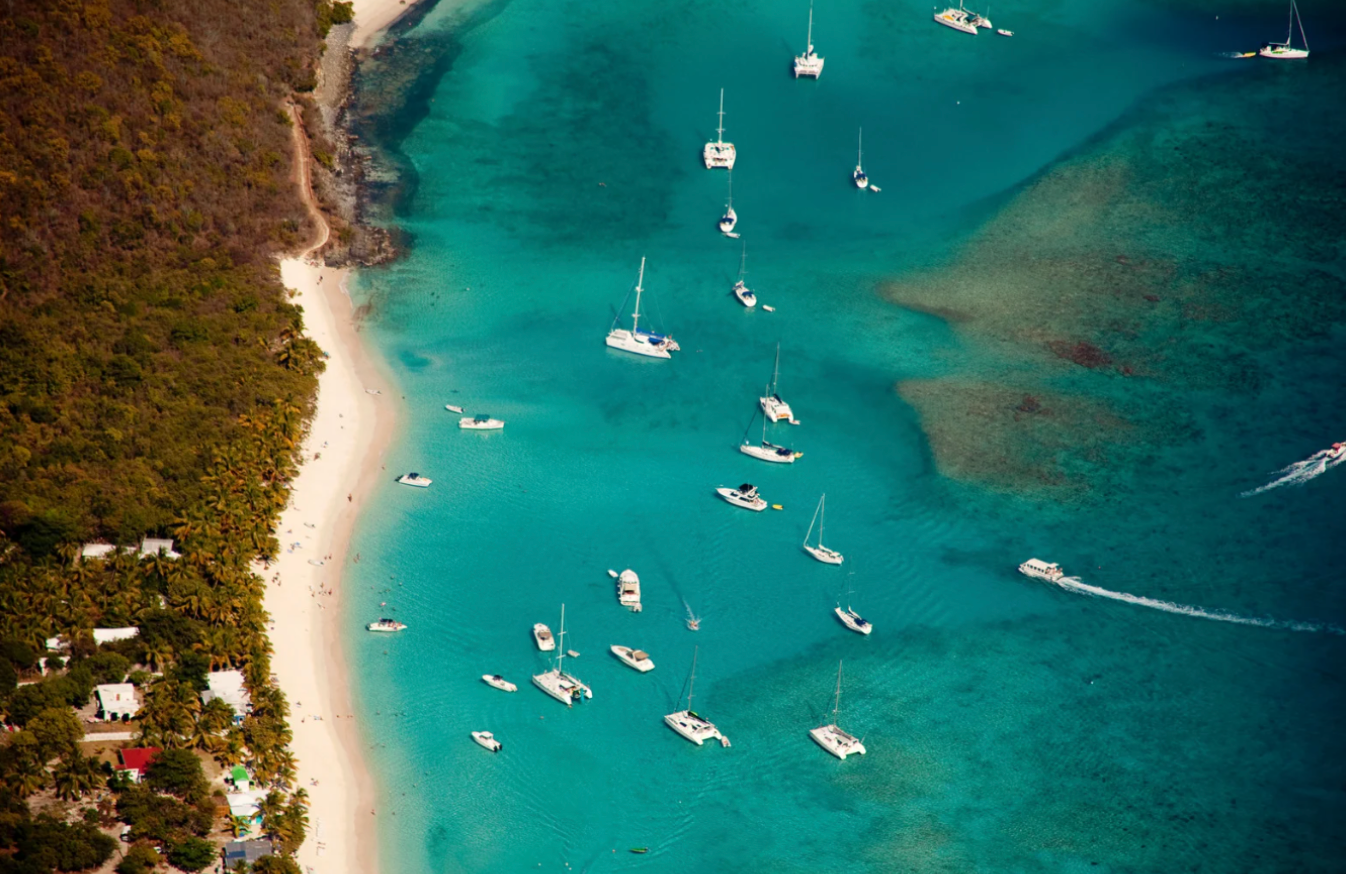
Playa Flamenco regularly appears on lists of the world's best beaches. A broad crescent of white sand meets vibrant, turquoise water, while dreamed by lush, green hills.
Near the northern end of the beach sit two rusted military tanks left behind from the island's former use as a U.S. Navy training ground. Today they've become a landmark and one of the island's most photographed features.
Culebrita and Dewey
Just east of Culebra lies Culebrita, a small, uninhabited coral island known for its natural tide pools, historic lighthouse, and protected anchorage. It’s famous for its crystal-clear water, powder-like sand, and historic 1886 Spanish lighthouse.
Back on the main island, Dewey is the sole town of Culebra. A handful of restaurants, waterfront bars, and locally owned shops give visitors an easy place to stretch their legs before returning to the boat. It isn't built around cruise ships or large resorts, which is exactly part of its appeal.
Vieques: Untouched Coastlines and Glowing Water
Vieques offers a different experience altogether. Larger than Culebra, the island's recent history helped preserve much of its natural landscape.
For decades, large portions of Vieques were used by the U.S. Navy for training exercises. When those operations ended in 2003, much of the land became protected as the Vieques National Wildlife Refuge. Today, miles of undeveloped coastline remain remarkably unchanged.
Sun Bay is one of the island's most popular beaches, while quieter stretches like Media Luna and Navío reward visitors willing to venture a little farther. Throughout the island, wild horses wander freely across open fields and occasionally along the shoreline.
Mosquito Bay
Recognized by
Guinness World Records as the brightest bioluminescent bay in the world, Mosquito Bay creates an experience that's difficult to describe until you've seen it firsthand. Every stroke of a paddle sends blue-green light rippling through the water, while fish leave glowing trails beneath the surface.
Because motorized boats aren't permitted inside the bay, visits take place by kayak or paddleboard with licensed local guides.
For the brightest display:
Visit during darker moon phases.- Reserve excursions well in advance during peak season.
- Calm evenings typically provide the best viewing conditions.
Planning the Crossing
One advantage of adding Culebra and Vieques to a charter itinerary is that the logistics are simpler than many guests expect.
Although Puerto Rico and the U.S. Virgin Islands are both U.S. territories, vessels traveling between them are still required to report their arrival through
U.S. Customs and Border Protection. On a crewed charter, those details are handled as part of the trip, allowing guests to focus on the experience rather than the paperwork.
From St. Thomas, the passage to Culebra generally takes four to five hours under normal trade wind conditions. Vieques sits another 10 to 12 nautical miles farther west, making it an easy continuation once you've arrived.
Many guests find that spending three or four days exploring both islands fits naturally into a week-long itinerary that also includes time around St. John and St. Thomas.
Why Guests Choose to Go Beyond the Usual Route
The Spanish Virgin Islands offer a different experience from the USVI and BVI.
Guests who make the crossing are rewarded with quieter anchorages, undeveloped coastlines, and communities that feel far removed from the busier charter hubs.
For guests considering whether to book a
crewed or
bareboat charter, this section of the trip often favors going with an experienced captain. Local knowledge helps plan the crossing, and choose the best anchorages, timing a visit to Mosquito Bay, or recommending beaches that many visitors never reach.
Start Planning Your Spanish Virgin Islands Charter
For guests who have already explored the familiar waters of St. Thomas, St. John, or the British Virgin Islands, Culebra and Vieques offer something refreshingly unique. The scenery feels quieter, the pace slows naturally, and experiences like watching wild horses along the shoreline or paddling through glowing water stay with people long after the charter ends.
If you're planning your next Virgin Islands itinerary and want to venture a little farther west, the Spanish Virgin Islands are well worth considering. The team at Island Yacht Charters can help design a route that balances the highlights of the USVI with the quieter anchorages and protected coastlines of Culebra and Vieques.